
Why Change Fatigue Is Undermining Transformation Programmes and What Leaders Can Do About It
Many organisations are not struggling because they lack strategy, ambition or good intentions. They are struggling because their people are tired. Across local government, adult social care, health and wider public services, teams have spent years responding to restructures, new priorities, funding pressures and increasing demand. Yet many transformation programmes still assume that people have unlimited capacity for change.
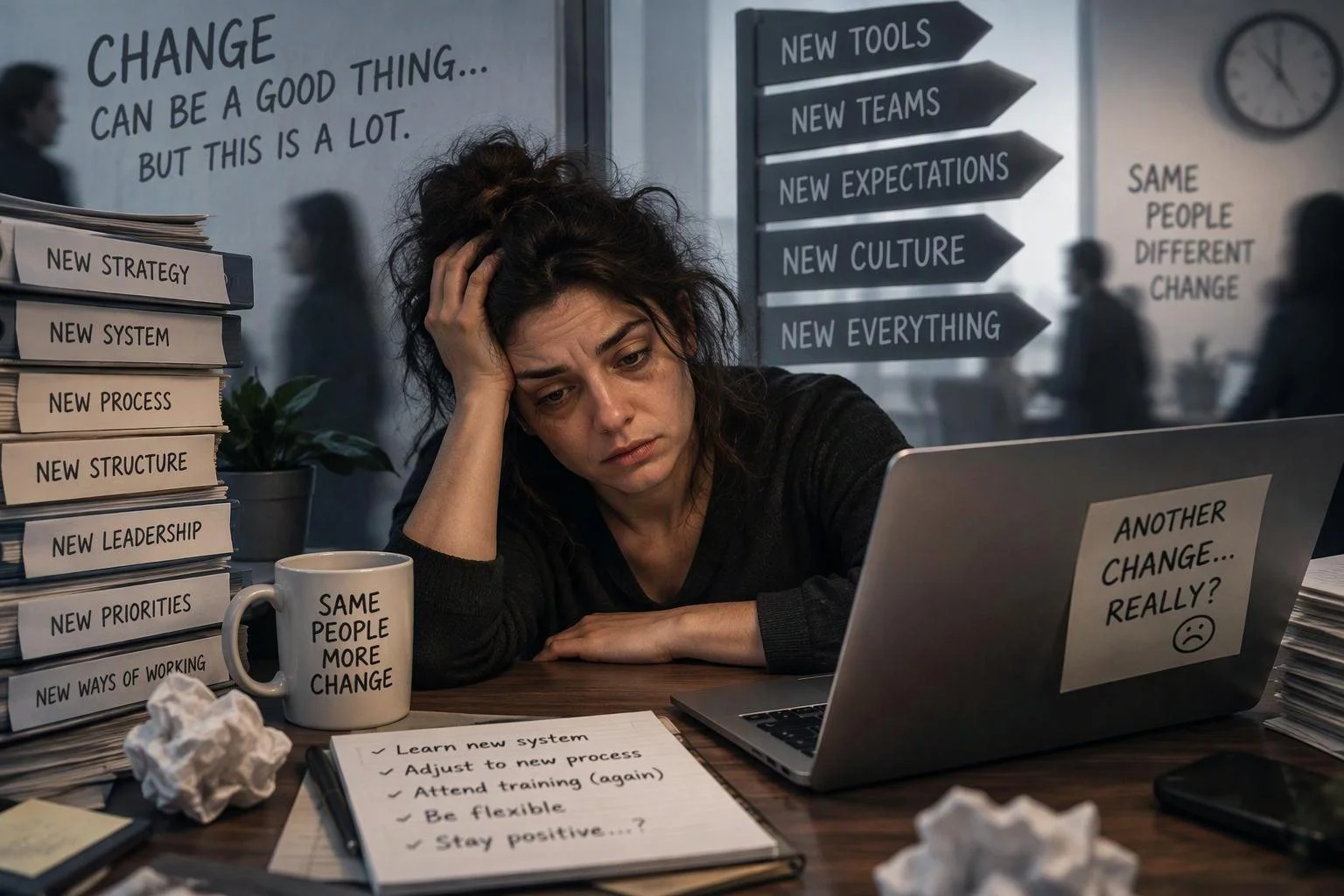
The result is change fatigue. When people become exhausted by constant organisational change, even the strongest transformation plans can lose momentum. Leaders may see resistance, scepticism or reduced engagement, but underneath these behaviours is often a workforce that has simply had too much change for too long.
Change fatigue occurs when individuals or teams become emotionally and psychologically drained by continuous change. It is not the same as resistance. Most employees understand the need for change. The challenge is that repeated change without sufficient support, clarity or recovery time can reduce people's energy and willingness to engage.
Common signs include lower morale, cynicism towards new initiatives, reduced participation, increased absences and a sense that every new programme is just another temporary priority. Staff may stop investing in change because they are waiting for the next one to arrive.
Several factors are driving higher levels of change fatigue. Organisations are managing multiple transformation programmes simultaneously. Demand continues to grow while resources remain stretched. Teams often move directly from one change initiative into another without time to consolidate improvements. Communication also becomes overwhelming, with staff receiving large volumes of information but limited clarity on what matters most.
The impact on organisations can be significant. Transformation slows because people disengage. Trust can decline if employees feel previous changes fail to deliver promised benefits. Innovation suffers because teams become focused on coping rather than improving. Culture can also be affected as confidence, collaboration and resilience begin to erode.
One of the biggest mistakes leaders make is assuming resistance equals negativity. Many employees are not pushing back against the destination. They are struggling with the pace of the journey. Another common mistake is focusing heavily on plans, governance and milestones while overlooking the human experience of change.
Effective leaders approach transformation differently. They create clarity about why change is happening and what success will look like. They prioritise ruthlessly and avoid overwhelming teams with competing initiatives. They listen actively to understand concerns and barriers. They celebrate progress and recognise the effort people are making throughout the process.
Most importantly, successful leaders focus on building capacity as well as capability. Training and development are important, but people also need time, support and psychological safety if they are going to adapt successfully.
Sustainable transformation is not about driving change harder. It is about creating conditions where people can contribute to change with confidence. When strategy, culture and workforce experience are aligned, organisations are far more likely to achieve meaningful and lasting results.
Organisations do not achieve transformation through plans alone. They achieve it through people. Addressing change fatigue is not a soft issue. It is a business and leadership imperative. Leaders who recognise this will be better placed to create organisations that are resilient, adaptable and capable of delivering lasting change.
If your organisation is experiencing transformation fatigue, workforce disengagement or challenges delivering change, now is the time to start a conversation about a more sustainable approach to transformation.